
Outdoor Spaces Built to Last from Day One
New Construction Landscape Installation in Blasdell for properties requiring complete outdoor environments from grade to planting
V.I.P. Property Maintenance handles new construction landscape installation for builders and new homeowners in Blasdell who need functional outdoor spaces established before move-in. The process starts with grading to establish proper drainage patterns, then moves through soil preparation, plant selection based on exposure and growth habits, and installation of hardscape features that define how the property will be used. New builds require coordination with construction timelines so that heavy equipment access doesn't damage finished work and irrigation lines are placed before final grading.
The installation creates a complete outdoor environment rather than adding landscaping as an afterthought, which means grading directs water away from the foundation, plant locations account for mature size rather than current nursery dimensions, and features like retaining walls or pathways are built into the original design. Properties in western New York face freeze-thaw cycles that shift poorly compacted soil, so base preparation for walkways and patios involves gravel subbase and proper drainage to prevent heaving during winter months.
Schedule a site evaluation to review grading requirements and establish a planting plan that aligns with your construction timeline.
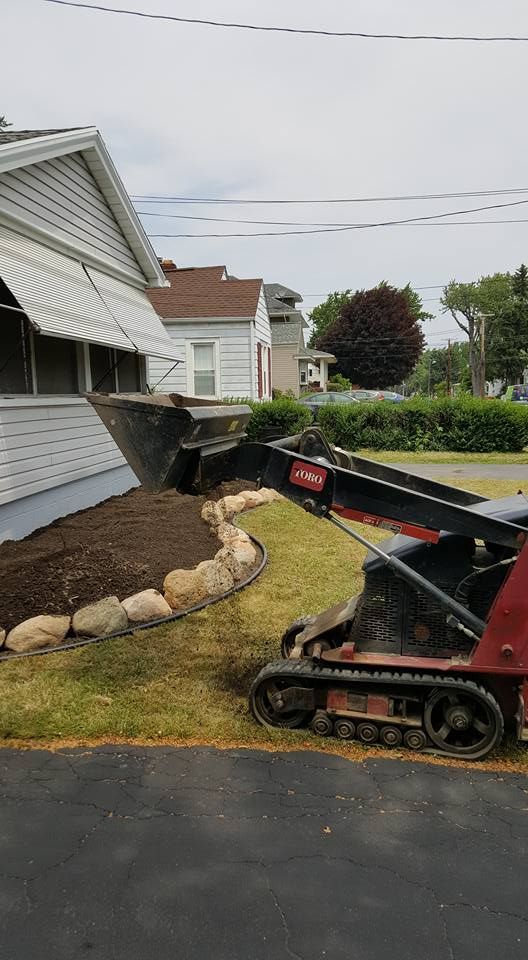
What Happens During a Full Landscape Install
The work begins with rough grading to establish slopes that move water toward drainage points rather than toward the foundation or into low spots where it pools. Topsoil is spread after grading is confirmed, and plant selections are made based on sun exposure, soil conditions, and how much maintenance you want to perform once the landscape matures. Trees are positioned to avoid utility lines and future root conflicts with driveways or foundations.
Once the installation is complete, you'll see defined planting beds with mulch that suppresses weeds during establishment, walkways or patios that are level and stable, and a yard that sheds water correctly during storms instead of creating puddles or erosion channels. Plants are sized appropriately so they don't outgrow their locations within a few seasons, and irrigation is zoned to deliver water where it's needed without oversaturating areas that drain slowly.
The installation is built for long-term growth, meaning plant spacing accounts for mature spread, soil amendments support root development, and hardscape materials are chosen for durability under seasonal temperature swings. New homeowners receive a landscape that's functional immediately but designed to improve as plants establish rather than require replacement due to poor planning.
Questions Property Owners Ask Before Starting
New construction projects in Blasdell often involve coordinating landscape work with final grading and utility installation, so timing and sequencing determine whether the finished result functions as intended or requires costly adjustments later.
What needs to be completed before landscape installation begins?
Rough grading, foundation backfill, and utility trenches should be finished and compacted so that settling doesn't create low spots or drainage problems after plants and features are installed.
How is plant selection determined for a new property?
Choices are based on sun exposure throughout the day, soil drainage observed during grading, mature plant size relative to available space, and how much seasonal maintenance you're willing to perform for pruning or cleanup.
When should landscape installation happen relative to construction completion?
Installation typically occurs after heavy equipment access is no longer needed but before final occupancy, allowing plants to establish root systems and reducing the risk of damage from construction traffic.
What's included in a full landscape install versus basic grading?
A complete installation includes final grading for drainage, topsoil placement, plant material and installation, mulch or groundcover, and hardscape features like walkways or retaining walls, while basic grading only addresses slope and compaction.
How long does it take for a new landscape to look established?
Perennials and groundcovers typically fill in within one to two growing seasons, while trees and shrubs develop their mature form over three to five years depending on species and planting size.
V.I.P. Property Maintenance coordinates installation with construction schedules to deliver outdoor environments that function correctly from the start. Request a consultation to review site conditions and develop a planting plan suited to your property's layout and exposure.