
Clean Lines That Define Your Property
Hedge Trimming in Orchard Park for properties with overgrown or uneven hedges that need restored shape and dense growth
Hedges lose their defined shape when trimming is delayed or inconsistent, resulting in sparse lower sections, uneven top lines, and growth that extends beyond intended boundaries. Regular trimming maintains clean hedge lines, encourages lateral branching that fills gaps, and keeps plants within their designed footprint. V.I.P. Property Maintenance provides hedge trimming for residential and managed properties in Orchard Park where hedges function as privacy screens, property borders, or formal landscape elements.
Trimming involves cutting back new growth to promote density, shaping hedges to maintain even top and side planes, and removing growth that disrupts the intended form. The frequency depends on species growth rate and how formal the hedge appearance needs to remain, with some hedges requiring multiple sessions per season to prevent woody overgrowth.
Schedule hedge trimming as part of your routine landscape maintenance to prevent shaping issues before they require corrective pruning.
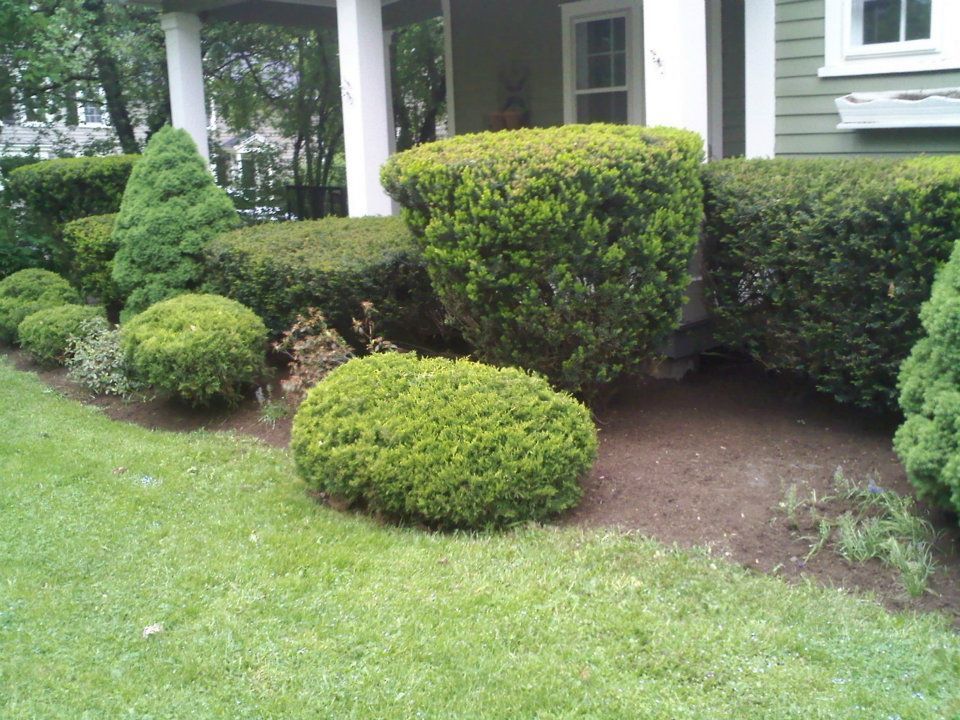
How Trimming Addresses Overgrowth and Sparse Sections
Trimming cuts are made just above lateral buds to stimulate branching, which increases foliage density and prevents gaps from forming as the hedge matures. Hedges are shaped with a slight taper, wider at the base than the top, so lower branches receive adequate sunlight and remain full rather than thinning out over time. Equipment choice depends on hedge size and species, with hand shears used for detailed work and powered trimmers handling larger formal hedges.
After trimming, hedge lines appear crisp and uniform, with restored definition along property edges or between landscape zones. Dense growth resumes quickly when trimming occurs during active growing periods, filling in the shaped form rather than producing long, leggy shoots that disrupt the hedge profile.
The service is suitable for both formal hedges that require geometric precision and informal hedges that need controlled shaping without strict uniformity. Timing depends on species bloom cycles, with some hedges trimmed after flowering to avoid removing buds, while others are maintained on a schedule independent of bloom timing.
Common Questions About This Service
Property owners usually ask about trimming frequency, what affects hedge health, and how to address uneven growth.
How often should hedges be trimmed to maintain their shape?
Fast-growing species like privet may need trimming every four to six weeks during the growing season, while slower species such as boxwood require less frequent attention. Trimming frequency depends on desired formality and how quickly new growth disrupts the hedge line.
What causes hedges to become sparse at the bottom?
Insufficient light reaching lower branches due to excessive top growth or vertical sides leads to dieback and thinning. Trimming with a tapered profile ensures light penetration, which supports foliage retention from top to bottom.
When is the best time to trim hedges in Orchard Park?
Most hedges are trimmed during active growth from late spring through summer, though flowering species are trimmed after blooms fade to preserve the next season's buds. Avoid late-season trimming that stimulates tender growth vulnerable to winter damage.
What happens if trimming is skipped for an extended period?
Hedges develop woody interior growth, lose their defined shape, and may require rejuvenation pruning to restore density and form. Regular trimming prevents the need for drastic cuts that temporarily reduce the hedge's screening function.
How does trimming fit into overall property maintenance?
Hedge trimming coordinates with mowing, bed edging, and cleanup schedules to keep the entire landscape looking maintained rather than having trimmed hedges contrast with neglected surrounding areas. Consistent service timing supports uniform property appearance.
V.I.P. Property Maintenance establishes trimming schedules based on hedge species, growth rate, and the level of formality required for your property. Contact our team to set up regular hedge maintenance that prevents overgrowth.